- Selling
- Buying
- Landlords
- Renting
- New homes
- House prices
- International services
 International offices
China, Hong Kong SAR, India, Indonesia, Malaysia, Middle East, Qatar, Singapore, Thailand and Turkey
Learn more - News
- Contact
- About us
- My B&R


 Free online valuation
Home Press releasesProperty marketPrime London buyer demand strengthens in Q2 as family markets drive activity
Prime London buyer demand strengthens in Q2 as family markets drive activity
- Property market
- 01.07.26
- Benham & Reeves
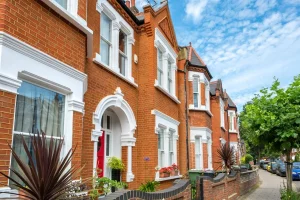 The latest Prime London Demand Index by London lettings and estate agent, Benham and Reeves, reveals that buyer demand across London’s prime property market strengthened during the second quarter of 2026, with overall demand reaching 14.5%. The capital’s family-focused prime neighbourhoods continued to lead the way, with Clapham, Wandsworth, and Chiswick among the strongest performing markets, while demand across the super-prime sector also improved.
The Prime London Demand Index* by Benham and Reeves monitors demand for London’s most expensive properties based on the level of market activity seen between th e £2m to £10m threshold and the super prime market of £10m+. Demand is based on the proportion of all homes listed for sale across the prime market that have already been sold subject to contract.
Prime market (£2m to £10m)
The latest index shows that during Q2 2026, demand for prime London properties sat at 14.5%, having increased by +1.0% versus Q1 2026. This also puts overall demand +2.2% higher than a year earlier in Q2 2025.
Clapham saw the highest demand for prime London properties, with 47.6% of all homes listed between £2m and £10m securing a buyer, followed by Wandsworth (43.3%), Chiswick (37.8%), Putney (32.5%), and Islington (32.4%).
In terms of quarterly momentum, Clapham topped the table, with prime homebuyer demand increasing by +19.8%. Other areas to see strong positive momentum included Wandsworth (+8.8%), Barnes (+8.7%), Maida Vale (+8.0%), Chiswick (+6.3%), Battersea (+4.7%), St John’s Wood (+3.6%), Putney (+3.6%), Pimlico (+3.2%), and Victoria (+2.6%).
At the other end of the spectrum, the sharpest quarterly declines were seen in Hampstead Garden Suburb (-7.8%), Canary Wharf (-6.3%), Islington (-4.9%), Fitzrovia (-3.0%), Wimbledon (-1.9%), and Notting Hill (-1.7%).
On an annual basis, Maida Vale (+11.9%), Wandsworth (+11.5%), Clapham (+10.7%), Belgravia (+3.5%), and Pimlico (+3.2%) recorded the strongest improvements in buyer demand. Meanwhile, Wapping (-14.7%), Canary Wharf (-10.5%), Barnes (-8.4%), Fulham (-5.2%), and Putney (-5.2%) saw the largest annual declines.
Super prime market (£10m+)
Across London’s super prime market, overall demand during Q2 2026 sat at 3.7%, representing a quarterly increase of +0.4% and an annual uplift of +0.5%.
Pimlico recorded the strongest level of super-prime demand, with 50.0% of homes priced at £10m or above securing a buyer during the quarter. Maida Vale followed at 28.6%, ahead of Highgate (14.3%), Chelsea (8.6%), Knightsbridge (8.5%), and St John’s Wood (8.3%).
Quarterly growth in buyer activity was strongest in Pimlico (+50.0%) and Maida Vale (+28.6%), while St John’s Wood (+4.6%), Victoria (+2.6%), Knightsbridge (+2.5%), and Belgravia (+1.9%) also saw increased levels of demand.
At the same time, some of London’s traditionally strongest super-prime markets saw a moderation in activity, with Highgate (-8.8%), Hampstead Garden Suburb (-6.5%), Chelsea (-3.9%), Kensington (-1.9%), and Mayfair (-1.7%) recording quarterly declines.
Marc von Grundherr, Director of Benham and Reeves, commented:
“Considering the economic and geopolitical uncertainty that has persisted through the first half of the year, the performance of London’s prime property market during the second quarter has been particularly encouraging.
What stands out is the continued strength of the capital’s established family markets. Areas such as Clapham, Wandsworth, Chiswick, and Barnes are proving especially popular with buyers who remain committed to securing quality homes in desirable locations, despite wider market uncertainty.
We’ve also seen the super-prime market continue to hold firm. While activity at the very top end of the market can fluctuate significantly due to lower transaction volumes, demand remains present and buyers continue to engage when the right opportunities become available.
London’s global appeal remains one of its greatest strengths. Whether purchasing a family home, a long-term investment, or a trophy asset, buyers continue to view the capital as a safe and attractive destination. As a result, we expect demand across both the prime and super-prime sectors to remain resilient through the second half of the year.”
| Prime market buyer demand – £2m to £10m | ||||
|---|---|---|---|---|
| Area | Prime category | Q2 2026 | Q Change | Annual change |
| Clapham | Prime SW London | 47.6% | 19.8% | 10.7% |
| Wandsworth | Prime SW London | 43.3% | 8.8% | 11.5% |
| Barnes | Prime SW London | 24.4% | 8.7% | -8.4% |
| Maida Vale | Prime C London | 21.4% | 8.0% | 11.9% |
| Chiswick | Prime SW London | 37.8% | 6.3% | -1.5% |
| Battersea | Prime SW London | 19.0% | 4.7% | 1.0% |
| St John’s Wood | Prime C London | 8.7% | 3.6% | 2.5% |
| Putney | Prime SW London | 32.5% | 3.6% | -5.2% |
| Pimlico | Prime C London | 12.3% | 3.2% | 3.2% |
| Victoria | Prime C London | 13.2% | 2.6% | 2.7% |
| Marylebone | Prime C London | 8.0% | 2.2% | 2.0% |
| Highgate | Prime NW London | 24.4% | 1.2% | -1.9% |
| Fulham | Prime SW London | 15.2% | 1.1% | -5.2% |
| Regents Park | Prime C London | 4.8% | 1.1% | 1.4% |
| Richmond | Prime SW London | 28.1% | 0.9% | -0.5% |
| Belgravia | Prime C London | 13.0% | 0.5% | 3.5% |
| Mayfair | Prime C London | 3.8% | 0.4% | 0.6% |
| Chelsea | Prime C London | 11.0% | -0.1% | -0.6% |
| Wapping | Prime E London | 3.8% | -0.5% | -14.7% |
| Knightsbridge | Prime C London | 6.8% | -0.7% | 0.3% |
| Holland Park | Prime C London | 12.3% | -0.8% | 1.0% |
| Kensington | Prime C London | 10.2% | -1.0% | 1.5% |
| Notting Hill | Prime C London | 11.3% | -1.7% | -1.4% |
| Wimbledon | Prime SW London | 28.6% | -1.9% | -3.9% |
| Fitzrovia | Prime C London | 6.5% | -3.0% | 2.5% |
| Fitzrovia | Prime C London | 6.5% | -3.0% | 2.5% |
| Islington | Prime N London | 32.4% | -4.9% | -2.1% |
| Canary Wharf | Prime E London | 0.0% | -6.3% | -10.5% |
|
Hampstead Garden Suburb |
Prime NW London |
9.9% |
-7.8% |
-0.7% |
| Overall | – | 14.5% | 1.0% | 2.2% |
| Prime market buyer demand – £10m plus | ||||
|---|---|---|---|---|
| Area | Prime category | Q2 2026 | Q Change | Annual change |
| Pimlico | Prime C London | 50.0% | 50.0% | 50.0% |
| Maida Vale | Prime C London | 28.6% | 28.6% | 28.6% |
| St John’s Wood | Prime C London | 8.3% | 4.6% | 8.3% |
| Victoria | Prime C London | 2.6% | 2.6% | -13.0% |
| Knightsbridge | Prime C London | 8.5% | 2.5% | 8.5% |
| Belgravia | Prime C London | 1.9% | 1.9% | -5.6% |
| Marylebone | Prime C London | 3.7% | 0.1% | 3.7% |
| Wapping | Prime E London | 0.0% | 0.0% | x |
| Holland Park | Prime C London | 0.0% | 0.0% | 0.0% |
| Notting Hill | Prime C London | 0.0% | 0.0% | 0.0% |
| Regents Park | Prime C London | 0.0% | 0.0% | 0.0% |
| Islington | Prime N London | 0.0% | 0.0% | 0.0% |
| Canary Wharf | Prime E London | 0.0% | 0.0% | 0.0% |
| Battersea | Prime SW London | 0.0% | 0.0% | 0.0% |
| Putney | Prime SW London | 0.0% | 0.0% | 0.0% |
| Fulham | Prime SW London | 0.0% | 0.0% | 0.0% |
| Fitzrovia | Prime C London | 0.0% | 0.0% | -25.0% |
| Mayfair | Prime C London | 0.0% | -1.7% | -4.4% |
| Kensington | Prime C London | 1.3% | -1.9% | 0.0% |
| Chelsea | Prime C London | 8.6% | -3.9% | 3.4% |
| Hampstead Garden Suburb | Prime NW London | 0.0% | -6.5% | -3.6% |
| Highgate | Prime NW London | 14.3% | -8.8% | 5.2% |
|
Wimbledon |
Prime SW London |
0.0% |
x |
0.0% |
| Overall | – | 3.7% | 0.4% | 0.5% |
The Prime London Demand Index by Benham and Reeves monitors demand for London’s most expensive properties based on the level of market activity seen between the £2m to £10m threshold and the super prime market of £10m+.
Demand is based on the proportion of all homes listed for sale across the prime market that have already been sold subject to contract.
Demand data based on listings sourced from Rightmove (22/06/2026).
Demand is based on the proportion of all homes listed for sale across the prime market that have already been sold subject to contract.
Demand data based on listings sourced from Rightmove (22/06/2026).

About the Author
Established in 1958, Benham and Reeves is one of London’s oldest, independently owned property lettings and sales agents. With specialism in residential sales, corporate lettings and property management in prime areas of London, the company operates from 21 prominently located branches and 11 international offices.View all posts by Benham & Reeves