- Selling
- Buying
- Landlords
- Renting
- New homes
- House prices
- International services
 International offices
China, Hong Kong SAR, India, Indonesia, Malaysia, Middle East, Pakistan, Qatar, Singapore, Thailand and Turkey
Learn more - News
- Contact
- About us
- My B&R


 Free online valuation
Home News
Landlords news
What landlords must know about rent increases, Section 13 and Tribunal decisions
What landlords must know about rent increases, Section 13 and Tribunal decisions
- Landlords news
- 19.08.26
- Benham and Reeves
|
Getting your Trinity Audio player ready...
|
Contents
- Key highlights from the report published by UK.Gov
- 2026 is busier than usual with higher reductions
- Region-wise distribution of cuts in rent increases
- Lack of evidence is the main problem in justifying an increase
- Evidence that landlords should provide when challenged
- Longer the wait, bigger the loss
- How an experienced agent can help landlords win
Under the Renters’ Rights Act (RRA), landlords can increase the rent once a year, but there are strict rules that apply to the proportion of the increase. Data published by the First-tier Tribunal shows that nearly 59% of all decisions were in tenants’ favour, making it important for landlords to be extra careful.
Between December 2018 and August 2026, the First-tier Tribunal passed decisions on nearly 5,780 tenant challenges to proposed residential rent increases in the UK. These cases were brought before the Tribunal by tenants who believed that their landlords had asked for higher rents than the true market value of the property.
Key highlights from the report published by UK.Gov
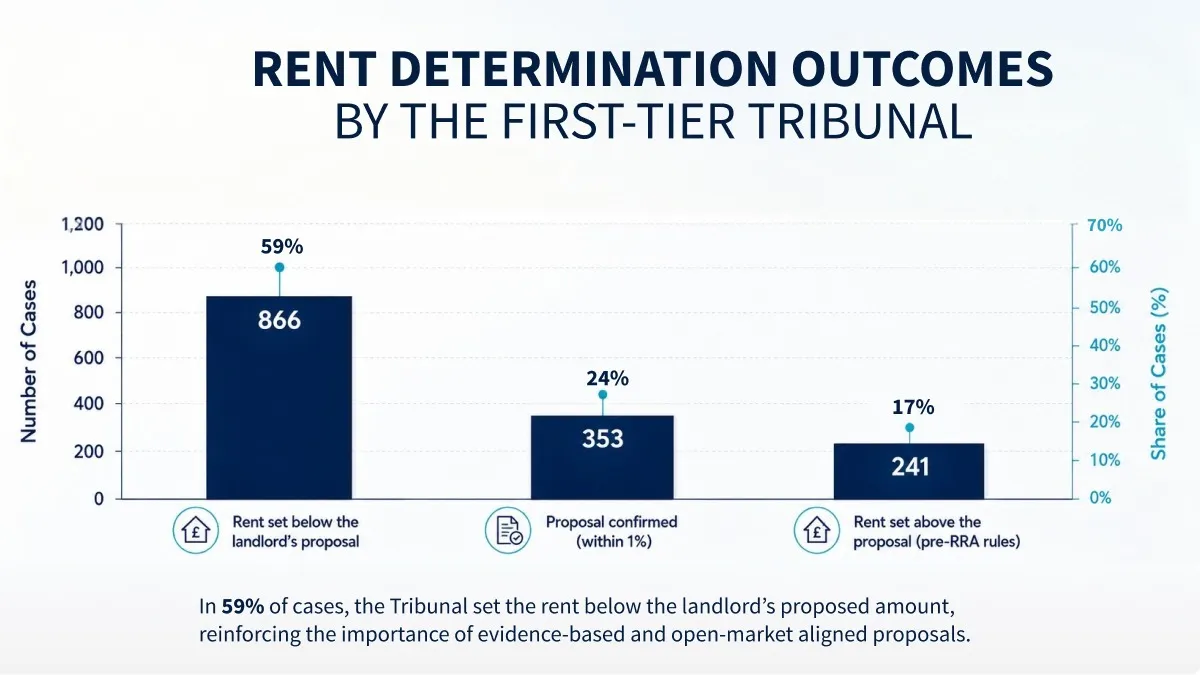
2026 is busier than usual with higher reductions
RRA limits the scope of the Tribunal to make decisions in favour of landlords where higher values, above the proposed increase, were previously allowed. Under current rules, landlords must now serve a Section 13 notice (Form 4A) (allowed only once a year) and give their tenants at least two months’ notice before the revised rent can come into effect.
Meanwhile, tenants can legally challenge the proposed rent increase and appeal to the Tribunal by submitting Form MR1 with a processing fee of £47. With the new rules in effect, it’s no surprise that landlords have lost some ground in these battles while tenants have gained some. Subsequently, in 2026, the number of cases ending in a reduction has increased to 64%.
Read our detailed guide for landlords explaining rent increases after implementation of the Renters’ Rights Act.
Region-wise distribution of cuts in rent increases
| Region | Cases measured | Rents reduced | Median rate cut | Median cut value (monthly) |
|---|---|---|---|---|
| London | 232 | 48.7% | 9.2% | £150 |
| Southern England | 384 | 60.9% | 9.7% | £100 |
| Eastern England | 280 | 58.2% | 10.3% | £125 |
| Midlands | 135 | 62.2% | 8.9% | £85 |
| Northern England | 176 | 60.8% | 9.1% | £75 |
While in every other region of the country where a reduction to the proposed rent was determined stands close to ~60% of the total measured cases, in London less than half the cases (48.7%) saw a reduction. Due to higher average rents in the capital, however, whenever the panel cuts, it results in a larger reduction (£150/monthly), despite the rate being close to the national median.
Lack of evidence is the main problem in justifying an increase
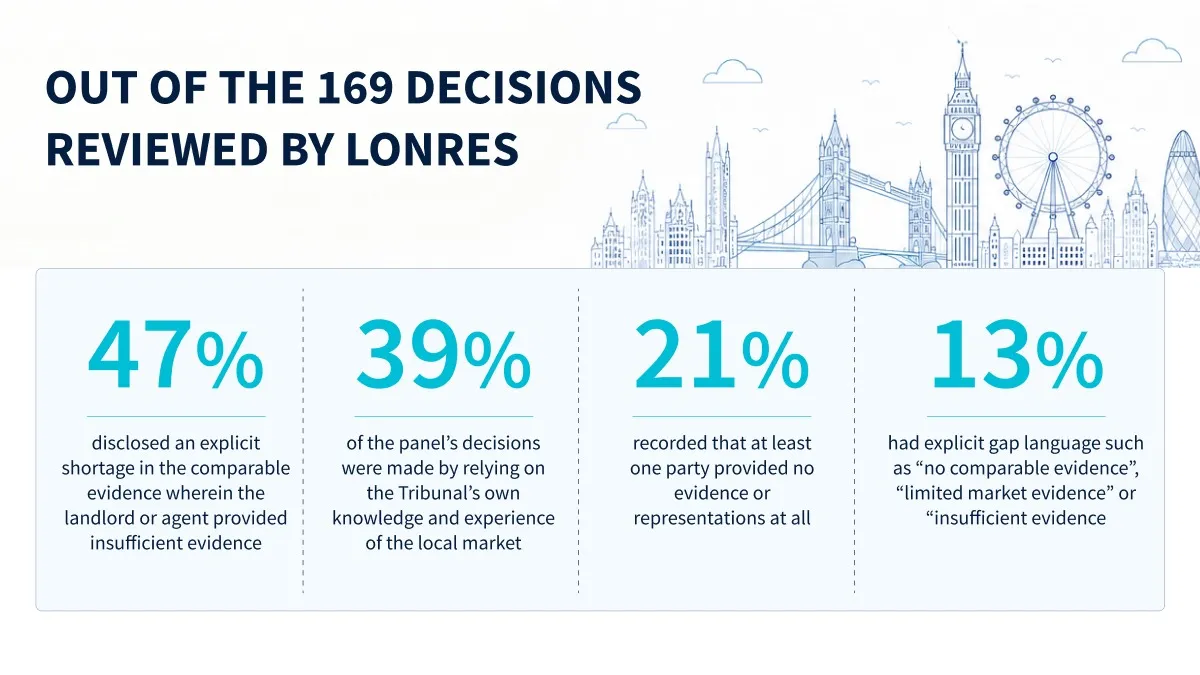
According to the data and networking platform LonRes, nearly half of all the reasoned decisions by the Tribunal cite an issue with the evidence provided.
Evidence that landlords should provide when challenged
When a tenant challenges the proposed rent increase, the onus falls on the landlord to justify the increase by providing strong evidence to the panel presiding over the case. Unlike fair-rent setups (pre-1989 regulated tenancies), where a formula is applied to determine the rent, assured shorthold (now periodic) and periodic tenancies follow an open-market model. This model only focuses on what a willing tenant would pay a willing landlord for the property in its current condition on the open market.
The evidence that the Tribunal will accept and expects includes;
It is also important to note that advertised or asking rents cannot be submitted as evidence, as the Tribunal will only consider achieved rents.
Longer the wait, bigger the loss
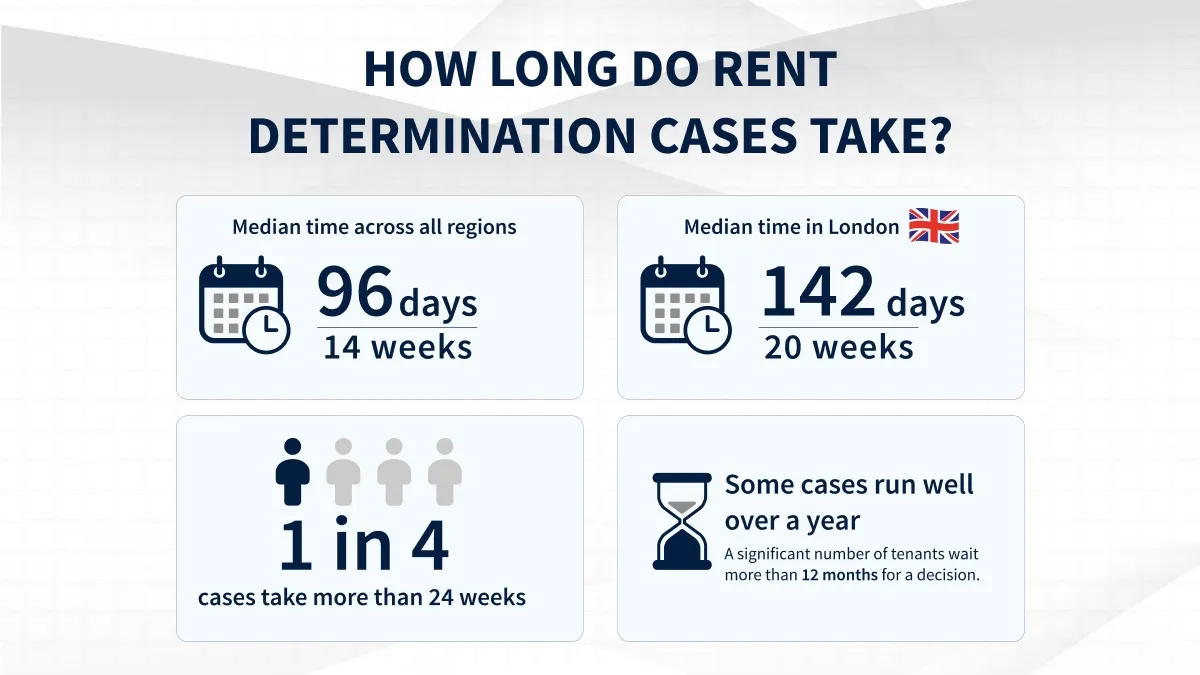
Among the sampled decisions, the median time taken from the date of application to the Tribunal’s decision is 96 days (14 weeks) across all regions. In London, the median wait time is longer, up to 142 days (20 weeks). While a quarter of all cases have taken more than 24 weeks, there have been cases that have run well over a year.
In the few instances where the panel upholds the rent increase, the date of increase is set from the day the decision is passed and not from the date of application. Since there is no concept of backdating or accumulating arrears, a longer wait time means loss of income.
How an experienced agent can help landlords win
Instructing an experienced London-based lettings agent like Benham and Reeves gives landlords a massive advantage. We follow a fair and transparent process, in which rent increases are clearly discussed and mutually agreed between landlord and tenant. This significantly reduces the chances of cases reaching the Tribunal. Even where a tenant challenges the rent increase, we gather genuine supporting evidence via our internal data and that of local market experts, who physically visit every property let through each of our 21 London branches.
As a landlord, you can be confident we’ll ensure you maximise the full potential of your rental property without compromising on value, yield or time. Contact our lettings team to learn more about investing in and letting a London property.
 Add Benham and Reeves as a preferred source on Google.