- Selling
- Buying
- Landlords
- Renting
- New homes
- House prices
- International services
 International offices
China, Hong Kong SAR, India, Indonesia, Malaysia, Middle East, Pakistan, Qatar, Singapore, Thailand and Turkey
Learn more - News
- Contact
- About us
- My B&R


 Free online valuation
Home News
Advice clinic
Quiet enjoyment vs essential access – Why delaying property inspections could cost you your investment
Quiet enjoyment vs essential access – Why delaying property inspections could cost you your investment
- Advice clinic
- 31.08.26
- Marc von Grundherr
|
Getting your Trinity Audio player ready...
|
Contents
- The numbers behind the risk – how often are landlords penalised?
- Why inspections are now harder to avoid missing
- Understanding a tenant’s right to “quiet enjoyment”
- What a lawful clause in the tenancy agreement actually requires
- What happens if the tenant refuses access
- What is the legal remedy for landlords and its limits
- What a responsible landlord should do before it reaches that point
- How often should a landlord inspect their rental property?
- FAQs
Every single year, landlords in London are unable to evict a bad tenant (who doesn’t pay or is destructive), face thousands of pounds in fines, or find themselves in contempt of court, which is not because they broke the law deliberately but because they failed to check their property in time. A missed inspection is rarely just a missed inspection. It is a compliance gap, and compliance gaps are exactly what enforcement teams are now paid to identify and fine landlords.
Tenants are entitled to the peaceful enjoyment of their rental home, free from undue interference by their landlord. But landlords carry a parallel non-negotiable duty to keep their rented property safe and compliant. Get the balance between these obligations wrong and the consequences fall firmly and wholly on the landlord.
The numbers behind the risk – how often are landlords penalised?
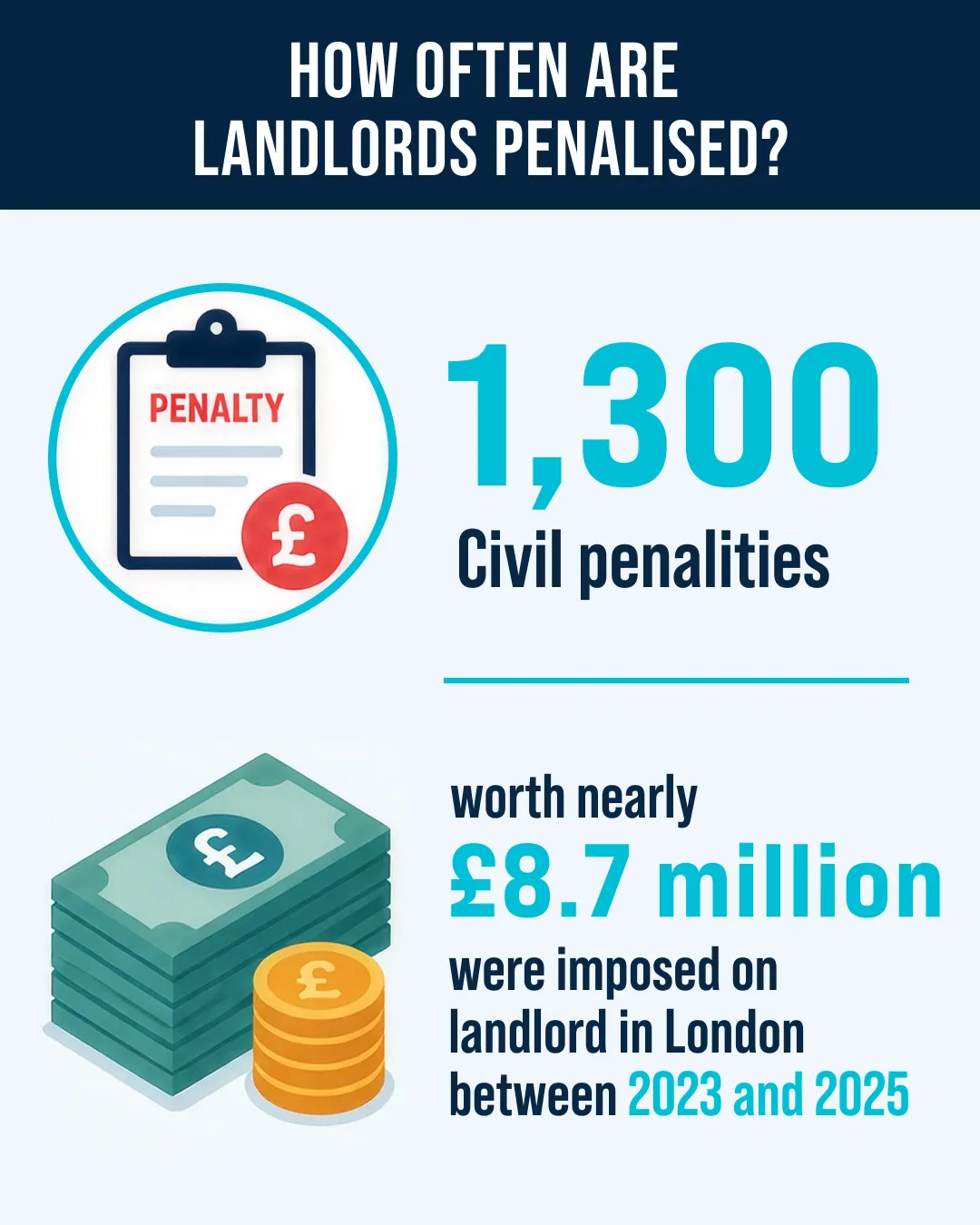
According to a recent Freedom of Information finding, over 1,300 civil penalties, worth nearly £8.7 million, were imposed on landlords in London between 2023 and 2025. That is not a projection or a worst case scenario, this is actually what happened!
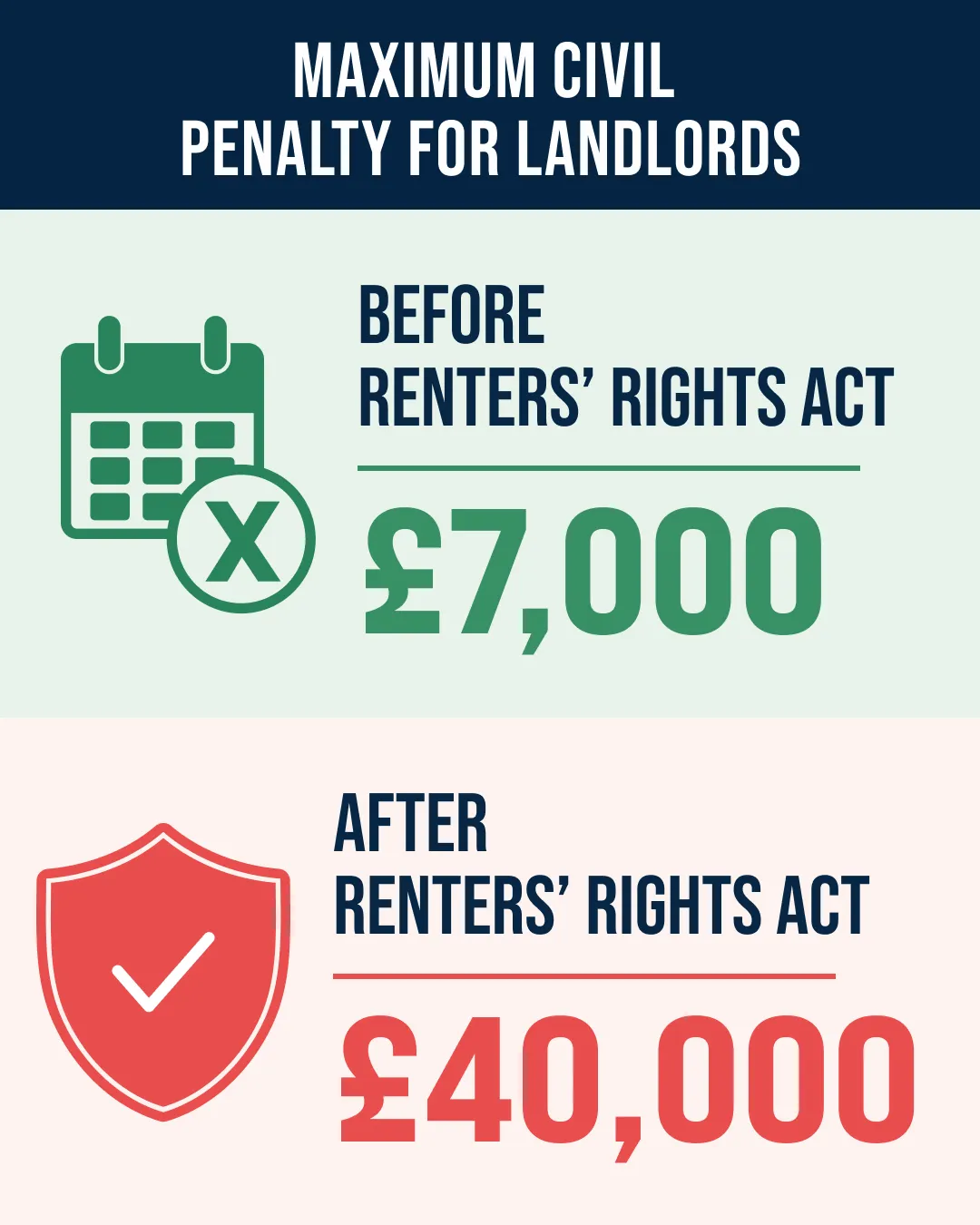
Under the Renter’s Rights Act, it is going to skyrocket as the maximum civil penalty per breach rises from £7,000 to £40,000. A landlord who once faced a manageable fine for a missed gas safety check could now face a penalty that wipes out a year’s rental income from the property in question.
Why inspections are now harder to avoid missing
To stay on the right side of the law, landlords must meet all compliance requirements, most of which cannot be verified from a desk and require physically visiting the property. Gas, electrical safety, fire safety checks, damp and mould, each requires a physical visit to the property.
This was easier during the fixed-tenancy era, when landlords had a natural window of vacant days between tenancies to inspect. But now under periodic tenancies, that window has effectively disappeared . If a landlord does not proactively arrange access, there is no longer a point in the tenancy cycle where access happens by default.

Understanding a tenant’s right to “quiet enjoyment”
Everyone has the right to privacy, and tenants accordingly have the right to occupy their rental home without constant interruption from a landlord or their agent. Most tenancy agreements state clearly how often a landlord may visit, if at all, and how much notice must be given beforehand. Turning up unannounced or too frequently, is not a grey area, it can constitute harassment. The law permits access at reasonable times to inspect and fulfil legal obligations.
What a lawful clause in the tenancy agreement actually requires
Tenancy agreements allow landlords to access their property but only where the date, time and reason for the visit are properly established. In practice, that means:
A landlord who steps outside these terms has no stronger legal footing than a tenant who refuses access unreasonably.
What happens if the tenant refuses access
If the tenant refuses entry even where the landlord’s request was reasonable and properly notified, is a serious problem. If required checks are not carried out and the property later falls short of council safety standards the landlord is exposed to negligence leading to fines and penalties.
The consequences extend further under the Renters’ Rights Act. Non-compliance stemming from a landlord’s failure to secure access can invalidate a possession claim brought under Section 8. In other words: a landlord who cannot show they made proper, documented attempts to inspect the property may find they are unable to recover it, even where they otherwise have valid grounds.
What is the legal remedy for landlords and its limits
If tenants refuse reasonable access, a landlord’s recourse is to apply to the local court for an access injunction compelling entry for safety assessments and legally required repairs. But this route is only a last resort, after every other means of communication has been exhausted and very importantly fully documented.
Once a court order is in place the stakes rise sharply. A tenant who ignores a formal court-ordered injunction is in contempt of court and faces fines or a court-ordered eviction. This is a far harsher outcome for the tenant than simply permitting the original inspection would have been.
What a responsible landlord should do before it reaches that point
The best approach for a landlord is to demonstrate, in writing, that every reasonable step was taken before any dispute arose:
i. Communicate clearly why access is needed and what the visit will involve.
ii. Keep detailed, dated records of every attempt made to arrange access.
iii. Show flexibility by offering multiple scheduling options to suit the tenant’s availability.
iv. Involve a professional letting agent or property manager where a dispute develops.
These steps do not guarantee access, but what it does is convert a landlord’s position from “I couldn’t get in” into a documented, defensible record of reasonable conduct. The key difference that matters if a case ever reaches a council, a tribunal, or a court!.

How often should a landlord inspect their rental property?
According to our Director, Marc von Grundherr, who also owns multiple rental properties, most tenants are cooperative and appreciate a landlord who shows interest. “Personally, with all my properties, I do four inspections a year. This isn’t to be intrusive, but to check in with each of my tenants to make sure they’re happy and there are no issues. A happy tenant is a good tenant who will take care of your investment like their own home if you show you really care.”
For most London landlords, we recommend two planned inspections a year as a working minimum. As your appointed lettings and management agent, Benham and Reeves ensures compliance checks are completed on schedule, maintenance is handled properly and communication with tenants stays transparent throughout. As a leading agent with over 65 years experience, we understand exactly how landlord-tenant relationships need to be managed for a compliant and successful lettings experience in London.
Contact our lettings team to learn more about our one-stop property lettings and management services.
FAQs
Q1. Can a landlord inspect a property without the tenant being present?
Only with the tenant’s explicit consent. Inspecting a property in the tenant’s absence without that consent breaches the tenant’s right to ‘quiet enjoyment’ and can lead to a harassment complaint.
Q2. Is 24-hours’ notice enough before a property inspection?
The 24-hour rule is the general statutory minimum set out in the government guidance. However, giving more notice and remaining flexible with tenants is still the more practical and lower risk approach.
Q3. Do tenants refuse a planned property inspection?
Most tenants allow landlords to carry out a planned inspection to go ahead, as it also serves their interest living in a compliant, well-maintained home. However, landlords should still honour the access clauses set out in the tenancy agreement and keep a written record of any unjustified refusal by the tenant.
Q4. How often should a landlord carry out property checks?
There is no specific fixed legal minimum, but we recommend at least two property inspections to stay ahead of maintenance issues and ensure compliance obligations are met before they become penalties.
 Add Benham and Reeves as a preferred source on Google.